

Lessons from the desk to the jobsite
I am writing this from a construction site.
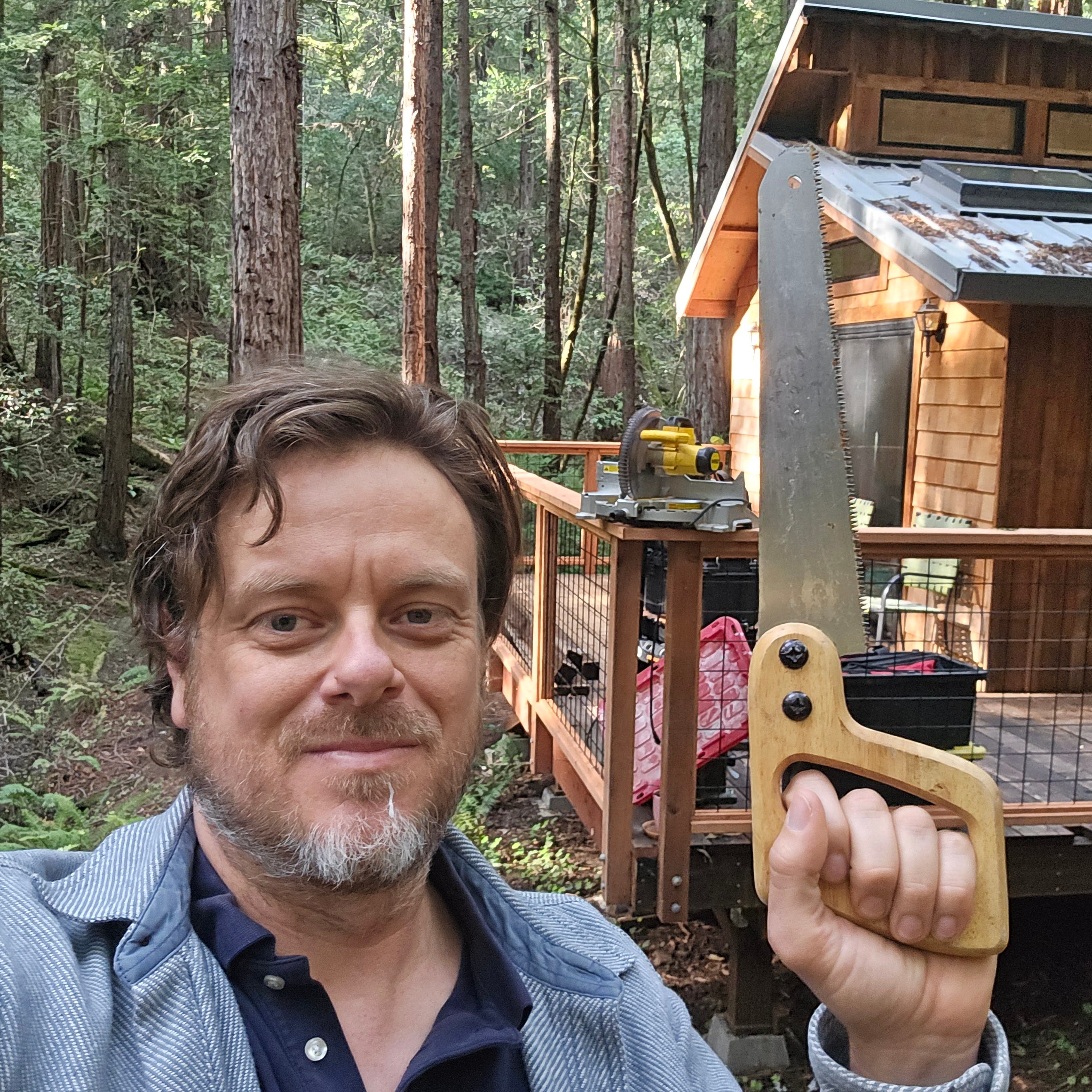
I am taking a short break from building a small shed for someone’s off-grid cabin. My truck is parked nearby, And my tools are stacked up on the deck behind me. I am borrowing their Wi-Fi. Instead of scrolling my phone for a few minutes, I took the time to write this newsletter.
Moments like this are actually a good reminder of something I have been learning lately.
Big changes in work or direction rarely happen all at once. More often they happen in small windows of time like this.
A few minutes here. A small experiment there. A slow shift that starts to compound.
Most days I work as a handyman. I build things, fix things, and solve problems for people. But that is only one part of my work.
Like a lot of people today, I “stack” income streams. I take on different gigs. I freelance online. I experiment with digital projects.
You could call it income stacking. For me it is stacking toward freedom. It's not what I want to do forever, but it keeps me free enough to work on my goals.
I know it's not just me. More people are starting to build their lives this way. A mix of projects, skills, and income streams slowly assembled over time rather than one single career track.
And the different things you do don't necessarily have to all be in the same realm.
You can work in a trade and do things online. Let me be an example of that. You can learn from my successes and my failures.
Over the years I have tried just about every kind of online business you can imagine. Courses, marketing services, content projects, digital products. Some things worked a little. Some things did not. Most of them never really felt aligned with how I like to work.
One thing I have learned from all of that experimenting is that trying new directions does not have to mean blowing up your entire life.
It can start with small tests. Small risks. A willingness to explore without committing everything at once.
That is often where the interesting things begin to take shape.
Something interesting has started happening for me recently, for example.
With AI becoming so powerful ( trust me I also have mixed feelings about AI) it has suddenly become possible for someone like me to build real software products without being a traditional programmer. I still have a lot to learn, and I often feel like an imposter when I am working on these things.
I do not write most of the code myself. I rely heavily on AI to generate code and help me debug problems. This is what they call “vibe coding.” And it turns out that it's something I really enjoy doing. I wouldn't have known that unless I tried it
It's true that I don't really know what I'm doing yet, but I am learning as I go.
Every week the system I use to build apps and websites gets a little more sophisticated. I understand a little more about how things work. I get better at asking the right questions and guiding the tools toward the result I want.
I'm even learning to code a little bit, which makes the process smoother
In a strange way, the process feels very familiar, even though it's brand new.
It feels a lot like being a handyman.
In the physical world the process is simple. You look at a problem. You figure out what tools are needed. If you do not know how to solve it yet, you learn. Then you build the solution.
That mindset turns out to transfer surprisingly well to other kinds of work too. The tools change, but the approach stays the same.
What I'm Building
The first tool I am building is called PocketBench.
PocketBench is a CRM (customer relationship management) for solo handymen and small service operators.
Basically, it's a tool to manage your home services business.
This is a perfect example of how you can take your real world experience and translate it into something else that combines what you're learning with what you already know.
I am not just building this as an experiment, I am building it because I need it myself. On a day-to-day basis actually.
Right now I use tool called Jobber to manage parts of my business. It works ok, but it is expensive and it clearly was not designed with a solo handyman in mind. A lot of the software out there assumes you have office staff, multiple crews, and structured workflows.
That is not how most small operators actually work.
So ask yourself this question: What do you know something about more than most that you could solve a problem for?
I know about construction and home services. It's something I've been doing for years. Now I know a little bit about creating software. How can I combine those?
I saw a gap in the market. Most of these tools are built for larger teams. But if you're a handyman or solo operator, you need to be able to track your business on the go.
Most of the time it is just one person trying to keep track of customers, jobs, messages, estimates, invoices, and scheduling while also doing the actual work. You are driving between job sites, answering texts, remembering what materials you need tomorrow, and trying to stay organized enough to keep the business running.
PocketBench is my attempt to build a tool that actually fits that reality.
Another tool I have been building is called Easeful.
Easeful came from a different problem I kept running into. When your income comes from multiple sources and arrives at unpredictable times, it becomes surprisingly hard to see what your financial future looks like even a couple of weeks ahead. I wanted something that could look forward and help me understand whether my bills were covered and what the next few weeks might look like.
Most financial tools are built around stable salaries and traditional budgeting. They do not adapt well to irregular income.
So I built something that tries to.
Both of these tools come from the same place. They come from real problems I encounter in my own life while trying to run a small business and stack income streams.
Working this way has taught me a few things.
Experimenting is valuable. In fact, most people probably do not experiment enough. They either stay where they are because it feels safe or they feel like the only alternative is to completely reinvent themselves overnight.
There is a middle path.
You can test things. Explore ideas. See what skills from your current work transfer into new projects.
But there is also a trap on the other side.
You can experiment so much that you never commit to anything long enough for it to actually become fruitful.
If I am being honest, that is something I have struggled with.
I have experimented a lot. Probably too much. I have started many things and moved on before they had enough time to grow.
That is something I am trying to change.
Once you find something that genuinely pulls you into a flow state, the challenge shifts. The real work becomes sticking with it long enough to see what happens.
Every business has boring parts. Even the work you care about eventually requires doing things that feel tedious or uncomfortable. Marketing. Documentation. Customer support. Fixing unexpected problems.
Those parts are not a sign that something is wrong. They are part of the long game.
Short-term versus long-term
Another thing that helps is building both short term and long term things at the same time. Immediate work keeps life stable. It keeps the lights on. It gives you the breathing room to pursue projects that might take years to mature.
That is another reason I still run my handyman business.
It pays the bills, but it also keeps me grounded in the real world. The kind of work where problems are tangible and solutions have to function in real conditions.
There is an interesting identity challenge that comes with living this way.
When people see you working as a handyman, they tend to assume that is your entire identity. You are the person who fixes the sink or builds the shed. They do not imagine that you might also be building software tools or experimenting with new kinds of work.
That tension is probably familiar to anyone trying to step into something new while still standing inside the work they already know.
So this is where I will share what I am learning as it unfolds.
Not from the end of the story, but from the middle of it.
Sometimes that means building something out of wood and screws.
Sometimes it means building something out of software and code that an AI helped me write.
Either way the process is the same.
You find the problem. You learn what you need to learn. And then you build the solution.